The Science of Writing a Life Into Another Brain
Suppose we could clone you tomorrow, ok next Tuesday.
Not metaphorically or digitally but specifically in a biological sense.
A laboratory takes one of your cells, extracts its genetic material, places it into an egg whose original nucleus has been removed and, after considerable difficulty, produces a human embryo carrying essentially your DNA.
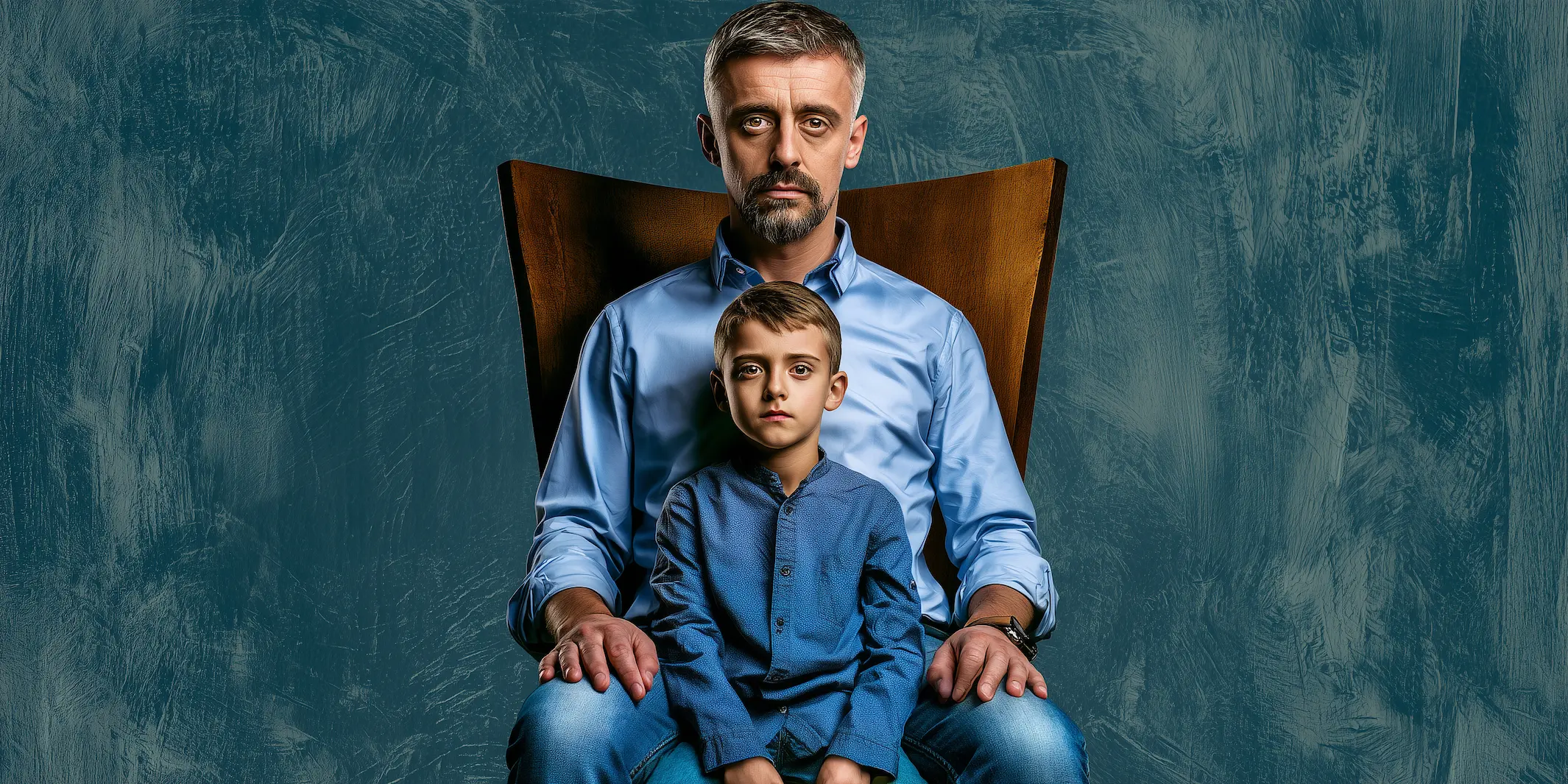
Years later, the child grows into a person who looks rather like you.
Then someone asks the inevitable question. “Can we give the clone your memories?”
This is where science fiction usually becomes tangentially impatient.
It installs a machine, attaches a few electrodes, flashes some lights and announces that the transfer is complete.
Actual science is systemically less cooperative in nature.
A clone would not be born with your memories because memories are not stored in DNA.
Your genes help construct your brain. They influence temperament, development, metabolism, sensory systems and thousands of other characteristics. But they do not contain a recording of your eighth birthday.
A genetic copy of you would therefore resemble an identical twin born many years later. The clone might have your eye color, your tendency toward a certain body shape and perhaps some behavioral predispositions influenced by genetics.
But the clone would not remember your parents. It would not know your friends. It would not remember the first time you drove a car or the smell of your childhood kitchen. Those things were written into your nervous system by experience.
So the problem is not really cloning. The problem is memory writing. And that is a considerably more interesting problem.
Scientists already know that memories involve physical changes in the brain. When we learn something, networks of neurons alter their behavior. Connections between cells may strengthen or weaken. Proteins are produced and gene activity changes. Some neural pathways become easier to activate later.
This means memory has a physical existence. That is encouraging!
If memory were completely mysterious like some invisible essence floating beyond matter. Science would have little tangible information to work with. But if memories depend upon physical patterns, then in principle those patterns might someday be measured. And if they can be measured, perhaps they can eventually be reproduced.
There is, however, an inconvenient distance between “in principle” and “Tuesday afternoon.” Consider something extremely simple. You remember your first dog, Buster. That memory may include the dog's appearance, its bark, the texture of its fur, where you lived, how old you were, how you felt and perhaps the day it died. Those pieces are not necessarily stored together.
Visual information involves one collection of brain systems. Sound involves another. Emotional significance involves still others. The memory becomes unified because the brain can reactivate portions of this distributed network.
To copy the memory, we might therefore need to identify an enormous pattern of neural relationships. Then we would need to recreate those relationships inside another brain. And the recipient's brain would not be identical to yours, even if the recipient were your clone.
This is important!
Two genetically identical brains do not develop with identical wiring. From infancy onward, experience changes them.
One child hears different words, another falls from a bicycle.
One learns French, another one hates spinach.
One becomes a physicist, another a biologist.
By adulthood, their brains contain decades of different biological history.
The clone's brain would therefore be similar enough to yours to make the idea tempting, but different enough to make the procedure terrifyingly complicated.
We might discover that memories cannot simply be copied as isolated files. Perhaps they must be translated.
Your memory of your mother might rely on one particular neural arrangement. The clone's brain might require a different arrangement to generate the same subjective experience.
That would turn memory transfer into something resembling translation between two languages that are almost, but not quite, the same.
We have already begun crude experiments related to this concept.
Researchers can manipulate specific groups of neurons associated with memories in laboratory animals. In mice, scientists have activated cells connected with particular experiences and have even influenced fear responses by altering memory-associated neural circuits.
This does not mean scientists are uploading complete memories. It means they are learning that memories can sometimes be identified and manipulated at the level of neural networks. That is the beginning of a map, it is not yet the destination.
Future brain-computer interfaces may make the problem more approachable.
Today, implants can already record certain kinds of neural activity and, in limited circumstances, help patients communicate or control devices.
More advanced systems might eventually monitor how a person's brain changes while memories are formed.
Imagine wearing or having implanted in your head a neural recording system throughout much of your adult life.
When you meet someone important, the system records the patterns. When you learn a skill, it watches the changes. When you recall your childhood, it compares the neural activity with previous recordings.
After decades, the machine might possess an enormous individualized model of how your brain represents information.
Then comes the clone.
Perhaps the clone receives a second interface capable not merely of reading neural activity but of encouraging particular patterns to form.
At first, the transferred information might be very simple. A visual association or a sound. The recognition of a place never visited.
Then perhaps a sequence some kind and then some cumulative knowledge.
One day, a clone might wake and recognize a photograph of a house in which it has never lived. “I know that place,” it might say. And everyone in the laboratory would become very quiet. But would the clone actually remember it?
That question matters! There is a difference between information and memory.
If I tell you that Paris is the capital of France, you know a fact.
If I somehow implant knowledge of your father's face into another person, that person might recognize him. But recognition is not the same as remembering sitting beside him when you were six years old.
Human memory contains emotion, chronology, bodily sensation and personal context. It contains the feeling that this happened to me. That final component may be the hardest to reproduce.
Suppose we eventually transfer ten thousand memories into your clone. The clone remembers your schools and your wedding. Your victories, embarrassments and your friends. The clone insists that those events happened to him.
Would he become you? Probably not.
He would become something stranger. A new person possessing two histories. His own childhood would remain and your memories would be added. Perhaps they would compete or perhaps they would merge, or a little of both. Perhaps he would occasionally be uncertain whether he remembered something because it happened to him or because it happened to you.
Psychology might become the greatest obstacle of all.
The technology could succeed perfectly and still produce a human being who could not emotionally survive the result.
For that reason, the first practical use of memory writing may not involve entire personalities. It may involve: fragments, medical knowledge, motor skills, languages and recognition patterns.
Perhaps memory restoration for people whose brains have been injured. Only after we learn to repair memories may anyone seriously attempt to duplicate a lifetime. And even then, there will remain one unavoidable distinction.
A clone carrying all your memories would still open his eyes from a different point in space. He would see you standing across the room. You would see him. Both of you might remember the same childhood, marrying the same person and writing the same stories.
Then the clone would say: “I remember being you.”
And you would answer: “Yes, but I don't remember being you.”
At that instant, the experiment would have succeeded.
And the existential philosophical problem would have only begun.